
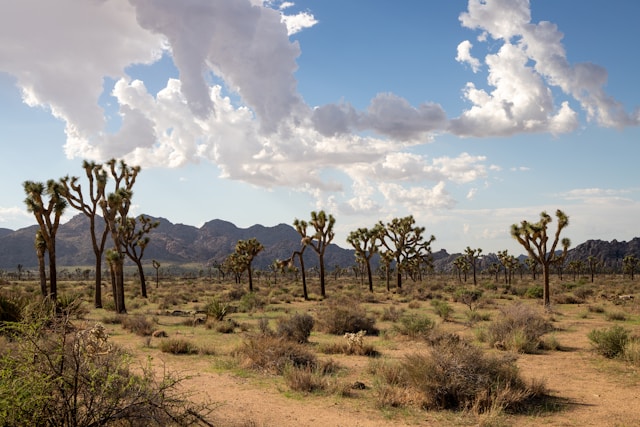
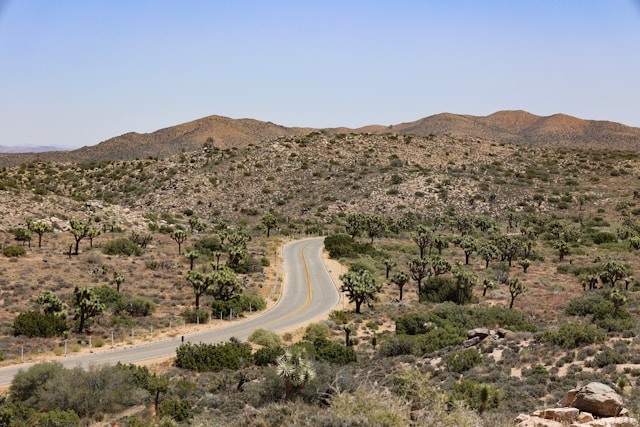
Joshua Tree National Park, a mesmerizing desert landscape where two distinct ecosystems collide, offers visitors a unique and unforgettable experience. With its iconic Joshua trees, massive rock formations, and diverse wildlife, this park has become a must-visit destination for nature enthusiasts and adventure seekers alike. In 2023, the park welcomed a record-breaking 3,270,404 visitors, showcasing its growing popularity. Whether you have one day or two to explore, this comprehensive itinerary will help you make the most of your time in this desert wonderland.
When to Visit Joshua Tree National Park
Best Seasons to Visit
The ideal time to visit Joshua Tree National Park largely depends on your preferences and tolerance for extreme weather conditions. Spring and fall are undoubtedly the most popular seasons, offering comfortable temperatures and stunning natural displays.
Spring (March to May) is particularly enchanting, with wildflowers carpeting the desert floor and Joshua trees in bloom. During these months, visitor numbers soar, with over 150,000 people exploring the park each month. The mild temperatures make it perfect for hiking and rock climbing, but be prepared for larger crowds and potential difficulty securing campsites.
Fall (September to November) is another excellent time to visit, with cooler temperatures and fewer visitors compared to spring. The park sees around 100,000 visitors per month during this season, offering a nice balance between good weather and manageable crowds. The golden hour light during autumn creates a photographer’s paradise, casting a warm glow over the desert landscape.
Weather Considerations
Summer (June to August) in Joshua Tree can be brutally hot, with temperatures often exceeding 100°F (38°C). While this deters many visitors, resulting in only 60,000-70,000 monthly visitors, it can be an excellent time for stargazing due to clear skies and warm nights. If you choose to visit during summer, plan your activities for early morning or late evening, and carry plenty of water.
Winter (December to February) brings cooler temperatures, with daytime highs around 60°F (16°C) and nighttime lows potentially dropping below freezing. While this season offers a unique perspective of the desert, be prepared for occasional rainstorms and the possibility of snow at higher elevations. Winter visitors often enjoy the solitude and the opportunity to experience the park’s stark beauty without the crowds.
Where to Stay Near Joshua Tree National Park
Camping Inside the Park
For those seeking an immersive desert experience, camping within Joshua Tree National Park is an excellent option. The park offers nine campgrounds with varying amenities and landscapes. Some popular choices include:
- Jumbo Rocks Campground: Located in the heart of the park, this campground is surrounded by massive boulder formations and offers 124 sites.
- Hidden Valley Campground: Ideal for rock climbers, this first-come, first-served campground provides easy access to popular climbing routes.
- Black Rock Campground: Situated in the northwest corner of the park, this campground offers amenities like running water and flush toilets, making it suitable for families and RVs.
It’s crucial to note that campgrounds fill up quickly, especially during peak seasons. Reservations are highly recommended and can be made up to six months in advance through the National Park Service website.
Hotels and Accommodations
If camping isn’t your style or you prefer more comfortable accommodations, there are numerous options in the surrounding communities. The towns of Joshua Tree, Twentynine Palms, and Yucca Valley offer a range of lodging choices, from budget-friendly motels to luxurious resorts and unique desert retreats.
Some popular options include:
- 29 Palms Inn: A historic property featuring cozy adobe bungalows and an on-site restaurant.
- Pioneertown Motel: A quirky, western-themed motel near the famous Pappy & Harriet’s music venue.
- Airbnb and vacation rentals: Many private homes and unique properties are available for rent, offering a more personalized desert experience.
Staying outside the park allows you to explore nearby attractions and enjoy amenities like restaurants and shops. However, it does mean a longer drive to reach the park’s main attractions, so factor this into your itinerary planning.
Things to Know Before Visiting Joshua Tree National Park
Park Entrance Fees
As of 2025, the entrance fees for Joshua Tree National Park are as follows:
- 7-day vehicle pass: $30
- 7-day motorcycle pass: $25
- 7-day individual entry (on foot or bicycle): $15
- Annual pass: $55
These fees contribute to the park’s maintenance and conservation efforts. In fact, visitor spending in 2024 contributed a significant $214 million to the local economy, highlighting the importance of tourism to the region.
For frequent national park visitors, consider purchasing an America the Beautiful Annual Pass for $80, which grants access to all national parks and federal recreational lands for a year.
Safety Tips
Visiting Joshua Tree National Park requires some preparation to ensure a safe and enjoyable experience. Here are some essential safety tips:
- Water: The desert environment is extremely dry. Carry at least one gallon (4 liters) of water per person per day. There are no water sources within the park, so bring all the water you’ll need.
- Sun protection: The desert sun can be intense. Wear sunscreen, a wide-brimmed hat, and sunglasses. Light, loose-fitting clothing that covers your skin is also recommended.
- Navigation: Cell phone service is limited or non-existent in many areas of the park. Bring a physical map and compass, and know how to use them.
- Wildlife awareness: While encounters are rare, be aware of the potential for rattlesnakes, scorpions, and other desert wildlife. Stay on designated trails and watch where you step or place your hands.
- Weather preparedness: Desert temperatures can fluctuate dramatically. Dress in layers and be prepared for both hot days and cold nights.
- Inform others: Always let someone know your planned route and expected return time, especially if you’re heading into the backcountry.
What to Pack
A well-prepared visitor is a happy visitor. Here’s a list of essential items to pack for your Joshua Tree adventure:
- Plenty of water (at least 1 gallon per person per day)
- High-energy snacks and meals
- Sun protection (sunscreen, hat, sunglasses)
- First aid kit
- Flashlight or headlamp with extra batteries
- Sturdy hiking shoes
- Layered clothing (including a warm layer for nights)
- Camera
- Binoculars for wildlife viewing
- Trash bags (pack out what you pack in)
- Portable phone charger or extra batteries
For photographers, don’t forget your tripod for capturing stunning night sky shots. Joshua Tree is renowned for its dark skies and offers excellent opportunities for astrophotography.
Day 1 Itinerary
Skull Rock
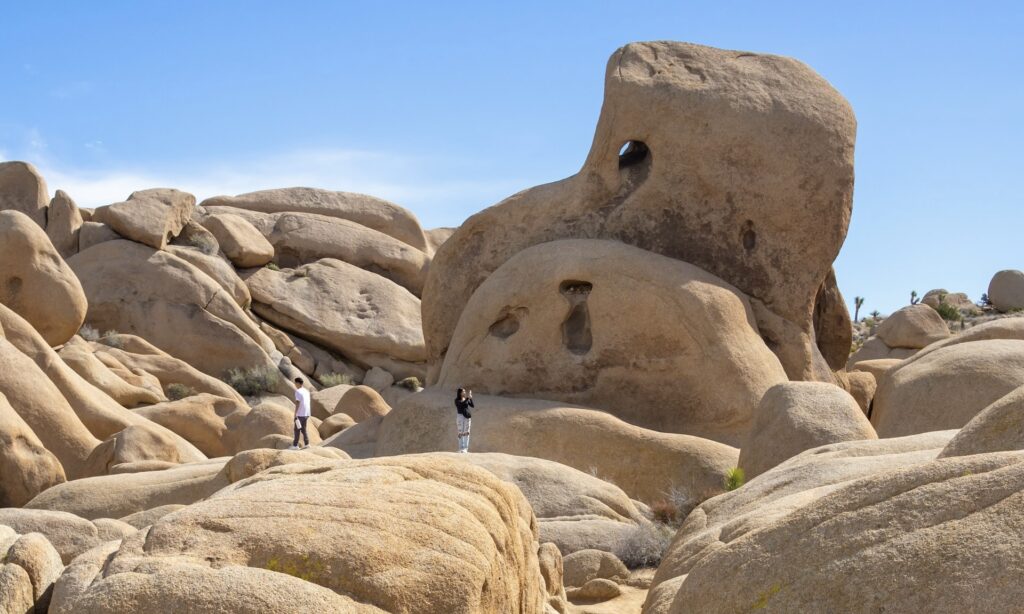
Start your Joshua Tree adventure with a visit to the iconic Skull Rock. This massive granite boulder, eroded over time to resemble a human skull, is a must-see attraction. Located along the main park road, it’s easily accessible and offers a great introduction to the park’s unique geology.
Take a short hike around the area to explore other fascinating rock formations. The 1.7-mile Skull Rock Nature Trail is an excellent way to immerse yourself in the desert landscape and learn about the park’s flora and fauna through interpretive signs along the way.
Hall of Horrors
Next, head to the Hall of Horrors, a playground for rock climbers and hikers alike. This area features a narrow passage between towering rock walls, creating an eerie and exciting experience. Even if you’re not a climber, the short walk to view the rock formations is well worth it.
Take some time to observe rock climbers tackling the challenging routes. If you’re interested in trying climbing yourself, consider booking a guided session with a local outfitter before your trip.
Ryan Mountain
For a challenging hike with rewarding views, tackle Ryan Mountain. This 3-mile round trip trail climbs 1,050 feet to one of the highest peaks in the park. From the summit, you’ll enjoy panoramic views of the surrounding desert landscape, including the San Jacinto Mountains and the Pinto Basin.
Start this hike early in the day to avoid the intense midday heat. Bring plenty of water and snacks, and allow about 2-3 hours for the round trip. The trail is well-maintained but steep, so pace yourself and take breaks as needed.
Barker Dam
As the afternoon heat begins to subside, make your way to Barker Dam. This short, 1.1-mile loop trail takes you to a water tank built by early cattle ranchers. The dam often holds water, attracting wildlife and creating a unique oasis in the desert landscape.
Keep an eye out for bighorn sheep, which sometimes visit the area for water. The trail also features Native American petroglyphs, although some have unfortunately been damaged by vandalism. Please respect these ancient artworks by observing from a distance and never touching or marking them.
Arch Rock and Heart Rock
End your first day with a visit to Arch Rock and Heart Rock. Located in the White Tank Campground area, these distinctive rock formations showcase the park’s geological wonders. The 0.5-mile trail to Arch Rock is an easy walk, perfect for winding down after a day of exploration.
Arch Rock, a natural arch formed by erosion, offers excellent photo opportunities, especially during the golden hour before sunset. Nearby, you can spot Heart Rock, a heart-shaped boulder that’s become a popular landmark for visitors.
Hidden Valley
As daylight fades, make your way to Hidden Valley for a magical sunset experience. This one-mile loop trail winds through a rock-enclosed valley that was once allegedly used by cattle rustlers. Today, it’s a favorite spot for both hikers and rock climbers.
The golden light of sunset illuminates the rock faces and Joshua trees, creating a breathtaking scene. Take your time on this easy trail, soaking in the tranquil desert atmosphere as your first day in Joshua Tree comes to a close.
Day 2 Itinerary
Sunrise at Cholla Cactus Garden
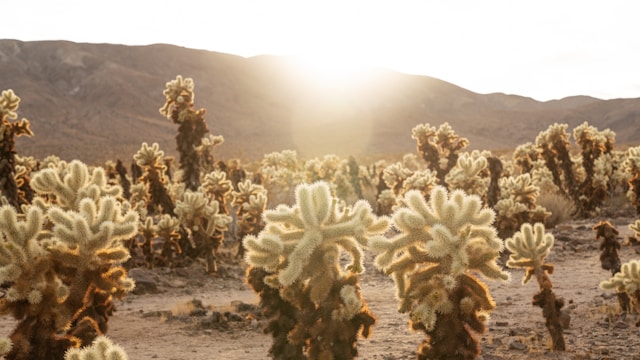
Begin your second day with a stunning sunrise at the Cholla Cactus Garden. Located in the Pinto Basin, this dense concentration of cholla cacti creates an otherworldly landscape. As the first light of day filters through the spiny plants, the garden takes on an ethereal glow.
Arrive about 30 minutes before sunrise to secure a good viewing spot. The short, 0.25-mile nature trail allows you to safely wander among the cacti. Remember to stay on the path and resist the urge to touch the deceptively fuzzy-looking chollas – their barbed spines can be painful and difficult to remove.
Mastodon Peak
After breakfast, head to the southern part of the park for a hike to Mastodon Peak. This 2.6-mile loop trail offers a moderate challenge and diverse desert scenery. The trail passes through washes, boulder fields, and stands of ocotillo before climbing to the peak.
From the summit, you’ll enjoy expansive views of the Salton Sea and Eagle Mountains. On your descent, take a short detour to see the remains of the Mastodon Mine, a gold mine from the early 20th century. This hike provides a great overview of the park’s mining history and desert ecology.
FortyNine Palms Oasis
In the afternoon, cool off with a visit to the FortyNine Palms Oasis. This 3-mile round trip hike leads to a hidden oasis of fan palms nestled in a rocky canyon. The trail is moderately strenuous, with two steep inclines, but the reward is well worth the effort.
The oasis provides a stark contrast to the surrounding desert, with its lush palms and year-round spring. It’s an important water source for wildlife, so you might spot bighorn sheep or birds if you’re quiet and observant. Remember that swimming or bathing in the oasis is not allowed to protect this fragile ecosystem.
Keys View for Sunset
As your second day draws to a close, make your way to Keys View for a spectacular sunset. This panoramic viewpoint, perched at an elevation of 5,185 feet, offers sweeping vistas of the Coachella Valley, San Andreas Fault, and on clear days, Mexico’s Signal Mountain.
Arrive early to secure a good spot, as this is a popular sunset location. Bring a jacket, as temperatures can drop quickly after sundown. The interplay of light and shadow across the vast desert landscape creates a mesmerizing display that perfectly caps off your Joshua Tree adventure.
Stargazing
Don’t rush back to your accommodation after sunset – Joshua Tree National Park is renowned for its dark skies and stellar stargazing opportunities. As night falls, find a safe spot away from traffic to lay back and marvel at the celestial display.
Popular stargazing locations include the Pinto Basin Road, Cottonwood Campground, or any of the park’s numerous pullouts. If you’re camping, simply step outside your tent for an unobstructed view of the night sky. Consider bringing a star chart or downloading a stargazing app to help identify constellations and planets.
Additional Things to Do Near Joshua Tree
Palm Springs Attractions
If you have extra time or are looking to extend your trip, consider exploring nearby Palm Springs. This desert oasis offers a stark contrast to the rugged wilderness of Joshua Tree, with its mid-century modern architecture, luxurious resorts, and vibrant cultural scene.
Some popular Palm Springs attractions include:
- Palm Springs Aerial Tramway: Ride the world’s largest rotating tram car for stunning views of the Coachella Valley.
- Palm Springs Art Museum: Explore a diverse collection of modern and contemporary art, as well as Native American and Western American art.
- Living Desert Zoo and Gardens: Visit this unique zoo and botanical garden showcasing desert flora and fauna from around the world.
- Moorten Botanical Garden: Wander through this family-owned “cactarium” featuring over 3,000 varieties of desert plants.
Local Museums and Art Installations
The area surrounding Joshua Tree National Park is known for its thriving arts community and quirky desert culture. Take some time to explore these unique local attractions:
- Noah Purifoy Outdoor Desert Art Museum: This 10-acre site features large-scale assemblage sculptures created from found objects, offering a thought-provoking exploration of art and social issues.
- World Famous Crochet Museum: Housed in a repurposed photo-processing booth, this tiny museum showcases a whimsical collection of crocheted objects.
- Integratron: This dome-shaped structure, built on a geomagnetic vortex, offers “sound baths” using quartz crystal singing bowls. It’s a one-of-a-kind experience that embodies the area’s spiritual and new-age leanings.
- Hi-Desert Nature Museum: Learn about the natural and cultural history of the Morongo Basin through exhibits on geology, wildlife, and Native American culture.
These local attractions provide a deeper understanding of the unique desert culture that has developed around Joshua Tree National Park, offering a perfect complement to your outdoor adventures.
Where to Eat Near Joshua Tree
After a day of exploring the park, you’ll likely have worked up quite an appetite. Fortunately, the communities surrounding Joshua Tree offer a variety of dining options to suit all tastes and budgets.
In the town of Joshua Tree, don’t miss the iconic Joshua Tree Coffee Company for your morning caffeine fix and light breakfast. Their small-batch, organic coffee is the perfect fuel for a day of adventure. For lunch or dinner, Crossroads Cafe is a local favorite, serving up hearty American fare with vegetarian and vegan options.
In nearby Yucca Valley, La Copine offers a more upscale dining experience with a seasonal menu featuring locally-sourced ingredients. For a quick and delicious meal, try the Natural Sisters Cafe, known for its fresh smoothies and vegetarian-friendly options.
If you’re staying in Twentynine Palms, check out the 29 Palms Inn restaurant, which uses produce from its own organic garden. For a taste of local flavor, head to the Rib Co., a casual barbecue joint popular with both locals and visitors.
Remember to make reservations for dinner, especially during peak seasons, as restaurants can get busy with park visitors. Also, be sure to carry snacks and plenty of water for your time in the park, as there are no food services within Joshua Tree National Park itself.
Final Thoughts and Tips
A visit to Joshua Tree National Park offers a unique opportunity to experience the raw beauty of the desert landscape. Whether you have one day or two, this itinerary will help you make the most of your time in this extraordinary place.
Remember to always prioritize safety and respect for the environment. Stay hydrated, protect yourself from the sun, and follow Leave No Trace principles to help preserve the park for future generations.
Lastly, be flexible in your plans. Natural events like storms can impact trail conditions and park access. In 2025, for example, heavy rains led to the closure of popular trails like the Oasis of Mara Trail and 49 Palms Trail. Always check the park’s official website for the latest updates before your visit.
Joshua Tree National Park is more than just a destination; it’s an experience that will leave you with lasting memories and a deeper appreciation for the desert’s subtle beauty. So pack your bags, bring your sense of adventure, and prepare to be amazed by this desert wonderland.