
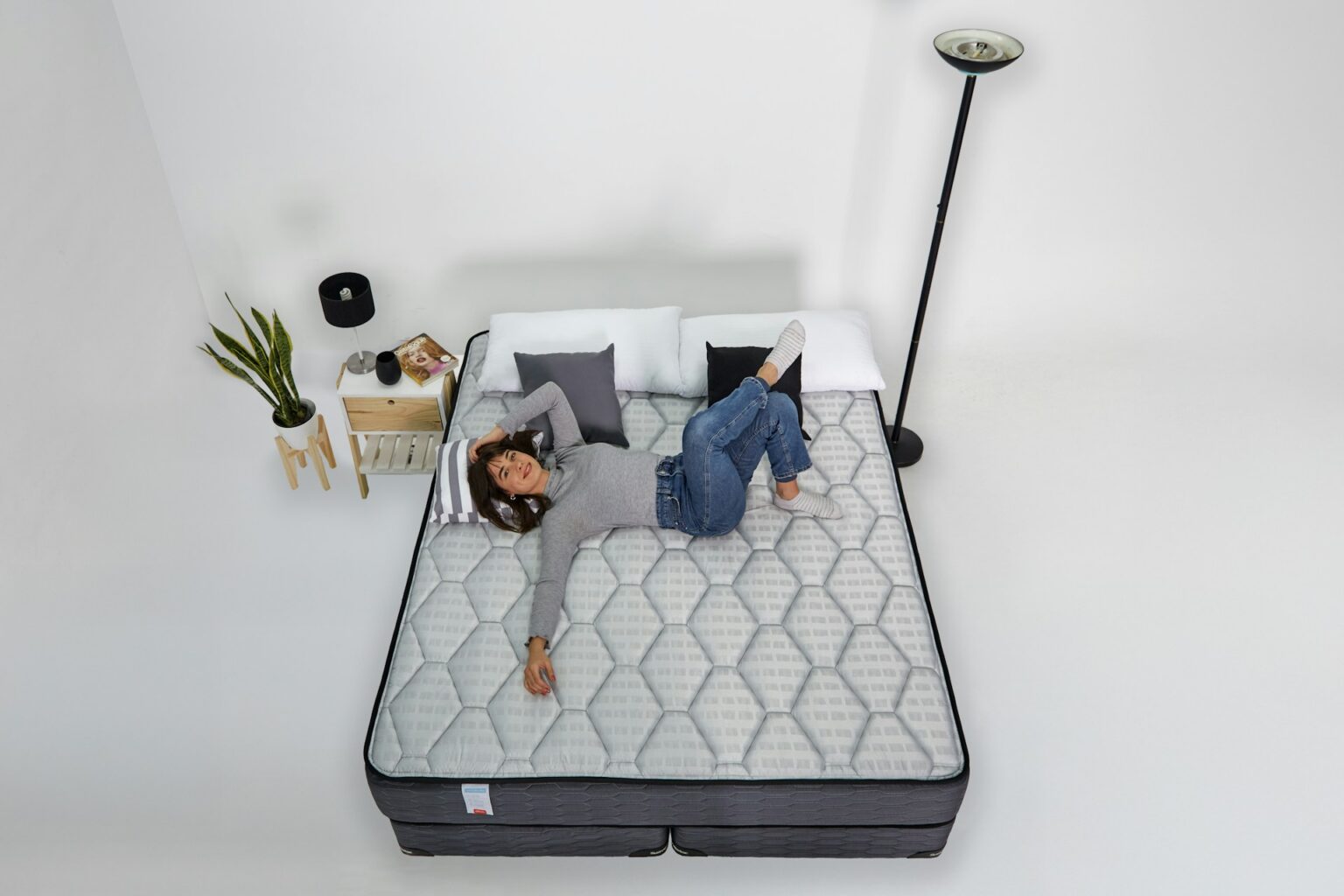
You can stretch, ice, and book endless massage appointments, but if you spend every night on an unsupportive mattress, you may still wake up with an aching back. Roughly 80 percent of Americans will experience low-back pain at some point, according to the National Institute of Neurological Disorders and Stroke. Because you’re horizontal for a third of each day, the surface beneath you plays an outsized role in how well—or how poorly—your spine recovers from daily stress.
The right mattress keeps the spine in a neutral position, cushions pressure points, and allows muscles to relax. The wrong one can do the opposite, creating a nightly cycle of misalignment and pain. Below is a practical, jargon-free roadmap to help you choose the best mattress for posture support—whether you shop online or in a showroom.
Start With the Goal: Neutral Spinal Alignment
When you stand tall with good posture, your spine isn’t stick-straight; it has gentle “S” curves in the cervical (neck) and lumbar (lower-back) regions. A posture-friendly mattress should maintain those same curves while you’re lying down. If the surface sags, the lower back collapses. If it’s rock-hard, hips and shoulders can’t sink in, forcing the spine into an unnatural arch. True support means striking a balance between pushback for alignment and contouring for pressure relief.
Match the Mattress to Your Primary Sleep Position
Side Sleepers
- What you need: Pressure relief at the shoulders and hips plus gentle support at the waist.
- Ideal feel: Soft–to–medium-firm (about 4–7 on a 10-point scale).
- Materials to consider: Memory foam, latex, or hybrid models with thick comfort layers. Their adaptability allows the wider parts of your body to sink in without contorting the spine.
Back Sleepers
- What you need: Extra reinforcement under the lumbar curve so the hips don’t dip lower than the shoulders.
- Ideal feel: Medium-firm to firm (6–8).
- Materials to consider: Latex, high-density memory foam, or hybrids with zoned coils. Many shoppers who hunt for the best mattress for back pain end up in this category because the balanced feel supports the spine while cushioning the shoulder blades.
Stomach Sleepers
- What you need: A sturdy surface that keeps the pelvis level with the ribs; otherwise, the lower back bows downward.
- Ideal feel: Firm (7–9).
- Materials to consider: Firm latex or hybrid beds with minimal sink. Some people place a slim pillow under the hips for extra neutrality.
Combination Sleepers
- What you need: A responsive mattress that adapts to position changes without trapping you in one spot.
- Ideal feel: Medium to medium-firm (5–7).
- Materials to consider: Latex or latex-hybrid models excel here because natural bounce makes it easy to rotate from side to back to stomach.
Understand the Core Mattress Types

Memory Foam
Viscoelastic foam softens with body heat and pressure, molding to every curve. It excels at pressure relief and motion isolation—ideal if your partner tosses and turns. Modern versions often include gel infusions or open-cell structures to reduce heat retention. Drawbacks include a “slow-sink” sensation some people find restrictive and a tendency to feel warmer than latex or coils.
Latex
Made from natural or synthetic rubber, latex is buoyant, breathable, and exceptionally durable. The foam pushes back more quickly than memory foam, so you get contouring without the deep hug. People who switch positions—or simply dislike the stuck-in-quicksand feel—tend to gravitate toward latex.
Innerspring
Traditional innerspring mattresses rely on steel coils topped by a thin layer of foam or fiber padding. They offer excellent airflow and edge support, but minimal pressure relief. If you go this route for budget reasons, pair it with a substantial mattress topper to protect shoulders and hips.
Hybrid
A hybrid combines a pocketed-coil support core with two or more inches of memory foam, latex, or another specialty material on top. Because the coils provide robust spinal support and the comfort layers cushion pressure points, a well-designed hybrid is often labeled the best mattress for back pain for a wide range of sleepers.
Firmness vs. Support: Know the Difference
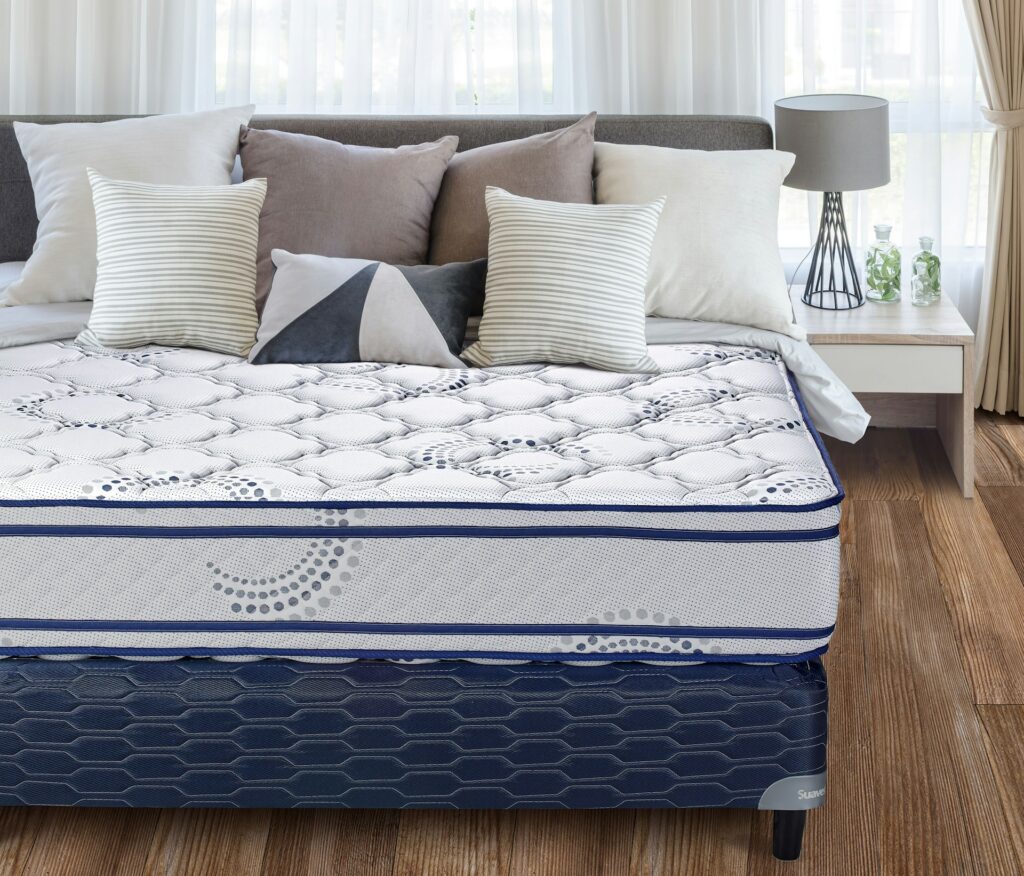
Shoppers frequently equate firmness with support, but they are distinct concepts. Firmness describes how hard or soft the surface feels at first touch, while support is about keeping the spine aligned over many hours. A soft mattress can be highly supportive if it uses high-density foams or zoned coils beneath the plush top. Conversely, a rock-hard bed made of low-grade materials can sag prematurely and fail at support.
Features That Make a Real Postural Difference
- Zoned Construction: Firmer foams or coils under the lumbar region, with gentler zones at the shoulders and legs, keep the spine level.
- Edge Support: Reinforced perimeters prevent roll-off and make it easier to get in and out of bed without compressing the middle sections.
- High-Density Base Foams: In all-foam models, look for a core density of at least 1.8 lb/ft³; higher is better for longevity and resistance to sagging.
- Cooling Elements: Gel infusions, phase-change materials, open-coil structures, or breathable covers maintain temperature neutrality, reducing nighttime restlessness.
- Motion Isolation: If you share the bed, this feature prevents your partner’s movement from disrupting your spinal alignment.
- Smart Adjustability: New “smart beds” use air chambers or modular foam layers you can reconfigure at home. High-end models automatically adjust firmness as you change positions, personalizing lumbar support.
Evidence-Based Firmness: What Science Says
Research backs up the medium-firm sweet spot for many sleepers. A 2015 study in the Journal of Chiropractic Medicine reported that participants who switched to a new medium-firm mattress experienced meaningful reductions in back pain and stiffness along with better sleep quality. The findings echo earlier surveys by the National Sleep Foundation, which noted that 59 percent of U.S. adults lose sleep to pain at least a few nights per week.
How to Test a Mattress Like a Pro
- Lie Down for 10–15 Minutes. Spend time in your normal sleep position, not just on your back.
- Check Spinal Alignment. Have a friend snap a phone picture while you lie on your side. Your neck and lower back should form a straight line; no hammocking at the waist.
- Roll to the Edge. Sit and lie near the perimeter. A posture-friendly mattress shouldn’t collapse under your weight.
- Note Pressure Points. If you feel numbness or tingling in shoulders, hips, or knees after a few minutes, the surface may be too firm—or not contouring enough—for your frame.
Online vs. In-Store: Navigating Trials and Warranties
Many American mattress-in-a-box brands ship compressed beds to your door and include 100-night—or longer—sleep trials. Use the entire window. Your body often needs a month to adapt to new support levels. If the company requires you to keep the bed for a minimum break-in (often 30 nights), honor that period before requesting a return. Also examine warranty terms. A solid posture-supporting mattress should carry at least a 10-year warranty that covers sagging beyond about 1 inch.
9. Budget Tips Without Sacrificing Posture
- Prioritize the Core. You can add plushness later with a topper, but you can’t retrofit sagging support layers.
- Look for Seasonal Sales. Major U.S. holidays—Presidents’ Day, Memorial Day, July 4th, Labor Day, and Black Friday—often bring steep mattress discounts.
- Consider Outlet or Previous-Year Models. Last year’s version of a well-reviewed hybrid may give the same spinal alignment for hundreds less.
When to Replace an Old Mattress
Even the best mattress for back pain loses its structural integrity over time. General guidelines suggest replacing every 7–10 years, but posture is the better barometer than age. If you notice sagging deeper than 1 inch, visible body impressions, or you wake up stiffer than when you went to bed, it’s time to shop.
Complementary Steps for Better Sleep Posture
- Pillow Height: Side sleepers typically need a higher-loft pillow to keep the neck aligned; back sleepers do best with medium loft; stomach sleepers should opt for low loft or no pillow under the head.
- Foundation Matters: Slatted frames should have gaps no wider than 3 inches to prevent foam beds from sagging. For heavier sleepers or couples, a platform with center support rails adds longevity.
- Stretching and Core Strength: A strong core stabilizes the spine so the mattress doesn’t have to compensate as much.
- Weight Distribution: If you and a partner have significantly different body types, dual-firmness or adjustable air beds let each person customize support.
Quick Recap
Choosing a mattress that supports posture boils down to four pillars:
- Know Thy Position: Side, back, stomach, or combination.
- Select Appropriate Firmness: Too soft or too hard can both derail alignment.
- Choose the Right Construction: Memory foam for cradling pressure relief, latex for buoyant support, hybrids for a balanced approach.
- Demand Durable, Zoned Support: High-density cores, quality coils, and solid warranties protect your investment and your spine.
The Bottom Line
Back pain costs the U.S. economy up to $200 billion annually in treatment and lost productivity, notes the American Chiropractic Association. Yet one of the simplest interventions—a supportive mattress—often gets overlooked. By focusing on spinal alignment, understanding your sleeping style, and insisting on high-quality materials, you can transform sleep from a nightly pain trigger into a powerful tool for recovery. Pay attention to proven research, take advantage of generous trial periods, and remember: the mattress you choose tonight will affect how your back feels every morning for years to come.