
If you trade foreign exchange from the UK, you already know that getting in and out of the market quickly—and at the right price—often makes the difference between a winning and a losing position. What you may not know is just how much work goes on behind the scenes every time you click “buy” or “sell”. Modern forex trading brokers rely on sophisticated algorithms to make sure your order is filled at the best possible terms. In this article we look under the bonnet of those algorithms, explain why they matter for your personal finances, and explore how regulation is pushing the technology forward.
Why Execution Quality Matters to Retail Traders
Execution quality boils down to three factors: price, speed and certainty. Get any of these wrong and the real-world cost can be significant:
- Price – A fraction of a pip worse on every trade may look trivial, but over the course of hundreds of trades it quietly eats into your returns.
- Speed – In a market that moves 24 hours a day, delays of milliseconds can be enough for the quoted price to disappear.
- Certainty (fill rate) – If an order is only partially filled or rejected, you are left exposed to further price swings.
The global FX market processes roughly $7.5 trillion in daily turnover, and the UK alone handles about 38 % of that volume according to the Bank for International Settlements. With so much activity funnelled through London, UK traders compete in one of the fastest and most liquid arenas in finance. Algorithms are now central to staying competitive.
The Rise of Algorithmic Trading in FX
Algorithmic trading is not new on the institutional side, but it has become ubiquitous. Refinitiv estimates that algorithms now trigger more than 90 % of spot FX orders globally. In the retail space, many platforms present a user-friendly interface while routing every order through a complex execution engine. Put simply, the moment you press the button, a computer program takes over.
Key Reasons Brokers Turn to Algorithms
- Speed – Computers process vast amounts of market data in microseconds, far beyond human ability.
- Consistency – Algorithms follow predefined rules, eliminating human error and emotional decision-making.
- Scalability – A broker can handle thousands of client orders simultaneously without degradation in service.
- Auditability – Every decision is logged, providing a clear trail for regulatory reporting and dispute resolution.
Core Algorithmic Components Inside a Forex Trading Broker
1. Liquidity Aggregation
Liquidity is the lifeblood of good execution. Instead of relying on a single bank for quotes, most competitive forex trading brokers aggregate prices from several Tier-1 liquidity providers. The algorithm continuously compares these incoming quotes and displays the most competitive bid/ask pair to the client. The result is:
- Tighter spreads, which directly reduce trading costs.
- Deeper order books, making it easier to fill larger positions without moving the market.
For example, if Bank A is quoting 1.2500/1.2502 on GBP/USD and Bank B is quoting 1.2501/1.2503, the aggregator might show you 1.2500/1.2502—the best bid from one bank and the best ask from another—creating a synthetic spread that neither bank offered outright.
2. Smart Order Routing (SOR)
After identifying the best quotes, the next problem is where to send the order. Liquidity venues differ in depth, latency and reliability. A Smart Order Router evaluates multiple venues in real time, scoring them on price, speed and fill probability. The router then slices your order, if necessary, and dispatches each slice to the venue most likely to achieve the best total outcome.
Imagine a volatile moment during a Bank of England announcement. One venue may still show a great price, but its order book is so thin that your order would move the market. Another venue may be a fraction of a pip worse but can absorb the entire order instantly. The SOR weighs these trade-offs in microseconds.
3. Latency Management
Latency is the hidden tax on execution. A one-millisecond edge was once shown to be worth up to $100 million a year to a large hedge fund. Retail traders don’t move that kind of money, but the principle is the same. Brokers therefore invest heavily in:
- Co-location – Placing servers in the same data centres as liquidity providers.
- Optimised network paths – Using the fastest fibre or microwave links where feasible.
- Efficient code – Trimming microseconds by refining every line of the matching engine’s software.
4. Slippage Control and Price Improvement
Even with fast links and good quotes, markets can move before an order reaches the venue, producing slippage. Algorithms combat this in two ways:
- Last-Look Logic – Some venues allow liquidity providers a brief moment to accept or reject a trade. Brokers monitor rejection rates and dynamically reduce exposure to providers with aggressive last-look practices.
- Price-Improvement Triggers – If the market moves favourably during routing, smart algorithms can pass that improvement on to the trader, turning potential negative slippage into a better-than-expected fill.
5. AI-Driven Execution Algorithms
Speed alone is no longer a differentiator—most major brokers are already fast. The new frontier is intelligence. Machine-learning models feed on historical trade data, level-2 order books and news sentiment to forecast short-term liquidity pockets or bursts of volatility. The algorithm can then decide to:
- Delay execution by a few hundred milliseconds to avoid a predicted liquidity hole.
- Split a large order into stealthy micro-orders to minimise market impact.
- Route to a dark venue where the model anticipates hidden liquidity.
According to Verified Market Research, the global market for AI in trading could surpass $33 billion by 2030, illustrating the industry’s commitment to smarter execution.
6. Transaction Cost Analysis (TCA)
The story doesn’t end once the order is filled. A separate analytics module conducts Transaction Cost Analysis, measuring how the execution compares to benchmarks such as arrival price, market mid-price or VWAP (Volume Weighted Average Price). TCA reports give brokers and clients hard evidence of performance, identify systematic slippage patterns and guide further algorithm tweaks.
The Regulatory Push: FCA Best Execution and Consumer Duty
The UK’s Financial Conduct Authority (FCA) has long required brokers to obtain “best execution” for clients. The bar was raised again when the Consumer Duty came fully into force in July 2023. Brokers must now demonstrate that their services deliver good outcomes for retail customers across price, value and support.
This has two big consequences for the algorithms:
- Proof Over Promise – It is no longer enough to state that an SOR looks for the best price; brokers need data-backed evidence, typically via granular TCA, showing that the algorithm consistently performs as advertised.
- Continuous Enhancement – The duty is not a static checkbox. Brokers must review and refine their execution logic regularly, especially when market conditions change or when slippage reports suggest degradation.
For UK traders, this is welcome news. The FCA’s emphasis on measurable outcomes puts direct pressure on forex trading brokers to invest in better technology, ultimately lowering costs and improving transparency for individual clients.
What This Means for Your Personal Finances
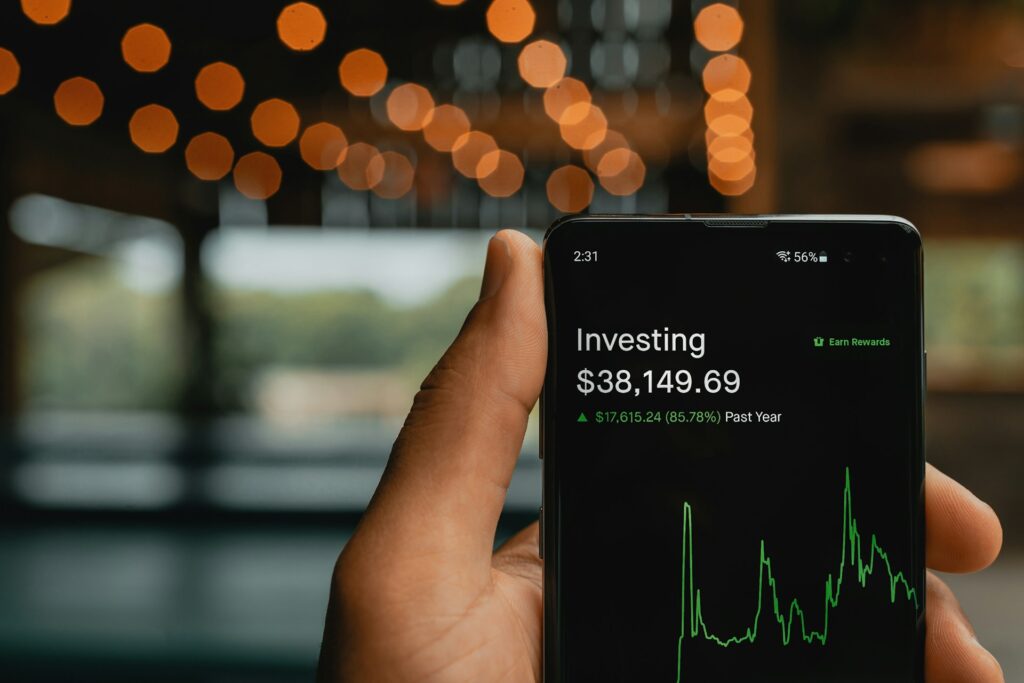
Trading costs may feel small per transaction, but they compound over time. Suppose you trade small-lot GBP/USD 200 times a year. Saving an average of 0.2 pips per trade through better execution equates to roughly £40 (£0.20 per trade on a micro-lot) in a single year. Scale that up to larger positions or more active strategies, and the savings become material.
Moreover, algorithms are increasingly adept at reducing negative slippage during volatile events such as central-bank announcements. Avoiding one poor fill during a 50-pip spike can protect weeks of carefully built gains.
Questions to Ask Your Broker
Given the importance of execution technology, consider asking the following:
- Do you aggregate liquidity from multiple providers or rely on a single bank?
- How does your Smart Order Router decide where to send my trade?
- Can I see a Transaction Cost Analysis report for my own trading history?
- What measures are in place to comply with the FCA’s Consumer Duty around best execution?
- Do you employ AI or machine learning to improve execution, and if so, how often are the models retrained?
Clear answers, backed by data, signal that the broker is serious about execution quality.
Future Trends: From Faster to Smarter
While speed will always matter, the arms race is shifting towards predictive intelligence and user-level customisation. Expect to see:
- Adaptive Routing – Algorithms that learn individual trader patterns and tailor routing strategies to specific styles (e.g., scalpers versus longer-term swing traders).
- More Transparent Dashboards – Real-time execution quality metrics directly in the trading platform, empowering traders to see the value they are getting.
- Integration with Personal Finance Tools – Automated FX trading accounts feeding data into budgeting or tax-reporting apps, making it easier to track net trading costs and returns.
The acceleration of these trends will further reduce the frictional cost of trading and make the market more accessible to everyday investors.
Key Takeaways
- Algorithms are the workhorses of modern foreign-exchange execution, handling everything from liquidity aggregation to slippage control.
- Smart Order Routing and latency reduction improve price, speed and certainty—critical components of profitable trading.
- AI and machine learning push execution from reactive to predictive, opening new avenues for cost savings and risk management.
- FCA regulations, especially the Consumer Duty, are forcing forex trading brokers to provide measurable proof of best execution.
- Understanding your broker’s execution technology can have a direct, compounding impact on your personal finances.
Final Word
In a market as vast and fast as foreign exchange, human reflexes alone cannot guarantee good fills. By harnessing cutting-edge algorithms, forex trading brokers give UK traders the same technological edge once reserved for large banks and hedge funds. As the regulatory environment tightens and AI becomes more advanced, expect execution quality to improve further—benefiting traders who take the time to understand and capitalise on these developments.
Ultimately, better execution is not just a technological victory; it is a financial one. Lower costs, reduced slippage and improved transparency translate directly into higher net returns. For anyone serious about their FX portfolio, paying attention to the algorithms behind the scenes might be the most profitable trade you make this year.