
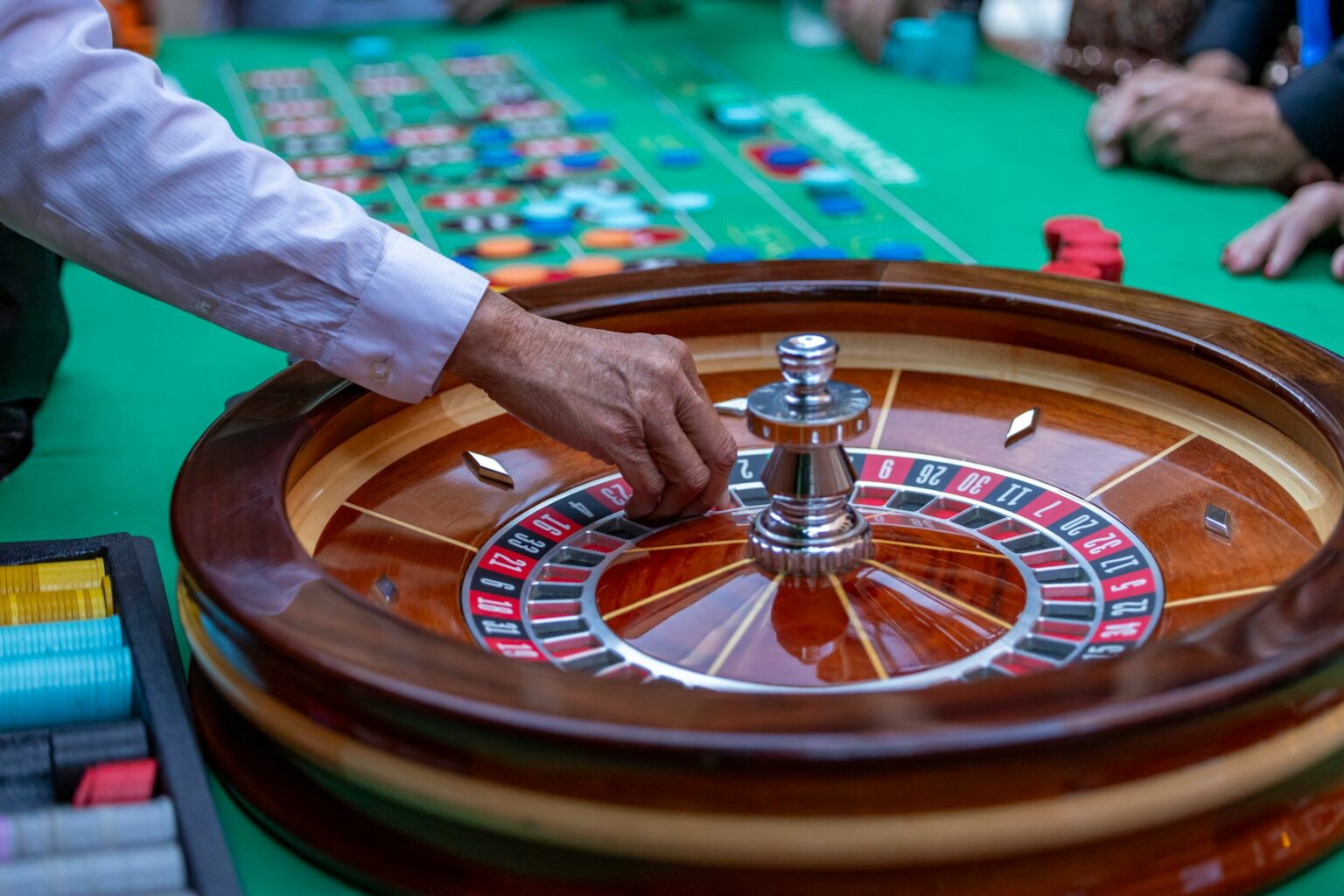
“You cannot beat a roulette table unless you steal money from it.” Decades later the question still fascinates gamblers and mathematicians alike: is there any legitimate way to outsmart the spinning wheel? This article dives into the hard numbers, the psychology, and the modern tech hype around roulette strategies while always circling back to one vital starting point—knowing the basic roulette rules.
First Things First: Master the Roulette
Before dissecting systems and statistics, you need to understand how the game is structured. The rules determine everything from payout ratios to house edge, so let’s recap the three main variants you will meet online and in land-based casinos.
- American Roulette: 38 pockets (1-36, 0, 00). The double zero boosts the house edge to 5.26 %.
- European Roulette: 37 pockets (1-36, 0). With only one zero, the house edge drops to 2.7 %.
- French Roulette: Also a 37-pocket wheel, but with player-friendly rules like La Partage and En Prison on even-money bets, cutting that specific edge to 1.35 %.
If you remember nothing else, remember this: choosing the right table according to the roulette regeln instantly halves (or even quarters) the casino’s advantage compared with the worst option.
The Immutable Math Behind the Wheel
Roulette is often romanticized, but beneath the velvet table lies a blunt mathematical reality called the house edge. Over thousands of spins the casino will keep a predictable slice of all wagers— 2.7 % on a European wheel, 5.26 % on an American one, and just 1.35 % on French even-money bets.
Why does the edge feel invisible in a short session? Enter the Law of Large Numbers. A lucky half-hour can wipe out months of statistical certainty, yet each spin is an independent event. Over the long haul the math snaps back. That is why casinos love games with steady volume, and why players often feel hot or cold even though the probabilities never budge.
Inside vs. Outside Bets
To appreciate how payouts relate to risk, consider two extremes:
- Straight-up bet (single number): Pays 35:1, but the chance of success on a European wheel is only 2.7 %.
- Even-money bet (Red/Black, Odd/Even): Pays 1:1, with a 48.65 % probability—still below 50 % because of the green zero.
No matter how you shuffle the chips, the built-in edge remains. You can vary volatility, not expectation.
Popular Betting Systems Under the Microscope

Martingale: Doubling Down on Disaster?
The Martingale is the superstar of roulette lore: double your bet after every loss, and one win recovers all previous losses plus a single unit of profit. Sounds fool-proof—until reality interferes.
- Table limits cap the doubling process.
- Bankroll limits hit even sooner. Eight losses in a row (a 0.39 % event on an even-money bet) turns a €10 wager into a €2,560 commitment—plus the stress that accompanies it.
- Long losing streaks happen. The probability of nine consecutive blacks or reds is roughly 1 in 512 spins. Play long enough and you’ll meet that streak.
“The Martingale is the most notorious and the most persistently fallacious of all gambling systems. It has caused more gamblers to lose more money in a shorter amount of time than any other system.” — John Scarne, magician and gambling expert
Reverse Martingale, Fibonacci & Friends
Other systems tweak the progression—parlaying wins instead of losses, or following a numeric sequence. What they share is reliance on streaks and the hope that variance will bend your way before limits strike. None of them change the edge; they merely redistribute risk across time.
Psychology of Roulette: Why the Brain Sees Patterns That Aren’t There
Roulette is more than math; it is a masterclass in human cognition. Two mental glitches work overtime at the wheel:
- Gambler’s Fallacy. After ten reds, black feels “due.” In truth, the chance of red on the next spin is still 18/37.
- Near-Miss Effect. Watching the ball settle in the pocket next to your number releases dopamine almost like a win. According to behavioural-addiction researcher Dr. Mark Griffiths, these near misses can fuel extended play even when the bankroll says, “Stop.”
Casinos do not need to manipulate outcomes—the human brain does the sales work for them.
Technology, AI, and the 21st-Century Dream of Beating Roulette

Every decade brings a new “breakthrough”: clocking wheels with lasers in the 1970s, physics-based phone apps in the 2000s, now AI “prediction bots.” For online RNG roulette, the hype is easily dismissed—the results are produced by cryptographically secure algorithms that no external software can read in advance. For live-dealer streams the idea of “visual ballistics” resurfaces: measure the dealer’s habit, video-track the ball, and predict the landing zone. Nice theory, but casino counter-measures (random rotor speed changes, multiple camera angles, latency buffers) make it impractical.
The takeaway: modern tech makes roulette look more immersive—Lightning Roulette’s random multipliers, Immersive Roulette’s Hollywood camera work—but the fundamental roulette regeln and house edge are untouched. In fact, those flashy multipliers often come with a stealthy reduction in base RTP to pay for the spectacle.
When Regulators Rewrite the Regeln
Regulatory bodies such as the UK Gambling Commission and Germany’s newly minted online-gaming authority increasingly scrutinize game design. Minimum spin durations, visible countdown timers, and mandatory display of RTP figures aim to give players a fighting chance against impulsive decisions. By slowing the game and clarifying the roulette rules on-screen, regulators hope to blunt the appeal of rapid-fire betting systems like the Martingale and make the statistical edge more transparent.
So, Can You Really Beat the Wheel?
If “beat” means “obtain a long-term positive expectation,” the scientific answer is no. But that does not make roulette pointless. Approached as paid entertainment—like buying a cinema ticket with a slim chance of a windfall—it can be exciting and statistically honest. Transparency about the odds makes roulette one of the few leisure activities where you know the price of admission upfront.

Science-Backed Tips for Smarter Play
- Choose the right variant. A French wheel with La Partage halves the edge on even-money bets. That single decision outranks any strategy tweak.
- Learn the roulette regeln inside out. Knowing payouts, table limits, and side-bet rules prevents costly surprises.
- Set a hard budget and time limit. Treat both as the entry fee for entertainment, not as a war chest to double.
- Avoid progressive betting systems. They raise variance, not RTP.
- Take breaks and watch for emotional cues. If a near miss makes you chase losses, step away. Science shows your brain is in dopamine mode, not rational-calculation mode.
- Don’t chase AI fairy tales. If a software ad claims to “beat” live roulette, remember Taleb: the odds are known and immutable.
Final Thoughts
Einstein’s tongue-in-cheek advice still rings true, but we do not need to rob the cage to enjoy the game. By selecting low-edge tables, respecting the roulette regeln, and keeping expectations realistic, you can savour the suspense of the spinning ivory ball without falling for mathematical mirages. Roulette is a dance between randomness and human hope; the key is to let the numbers lead and keep your wallet off the floor.