

Yellowstone National Park, a sprawling wonderland of geothermal marvels and diverse wildlife, beckons millions of visitors each year. In 2025 alone, the park welcomed over 1.6 million recreation visits by June, marking a 4% increase from the previous year. With such popularity, planning an efficient itinerary becomes crucial, especially for those with limited time.
This comprehensive guide will help you navigate Yellowstone’s top attractions in just two days, ensuring you don’t miss the park’s iconic features and hidden gems.
Introduction to Yellowstone National Park
Yellowstone, America’s first national park, is a testament to nature’s raw power and beauty. Spanning nearly 3,500 square miles across Wyoming, Montana, and Idaho, it’s home to the world’s largest collection of geysers, including the famous Old Faithful. The park’s diverse landscapes range from bubbling mud pots and colorful hot springs to vast canyons and lush forests teeming with wildlife.
How to Get to Yellowstone
Yellowstone’s remote location adds to its allure but requires some planning. The park has five entrances, each offering unique advantages depending on your starting point and itinerary:
- North Entrance (Gardiner, Montana): Closest to Mammoth Hot Springs
- Northeast Entrance (Cooke City, Montana): Ideal for wildlife viewing in Lamar Valley
- East Entrance (Cody, Wyoming): Scenic route through Shoshone National Forest
- South Entrance (Jackson, Wyoming): Near Grand Teton National Park
- West Entrance (West Yellowstone, Montana): Most popular, closest to Old Faithful
The nearest major airports are in Jackson Hole, Wyoming, and Bozeman, Montana. From there, you can rent a car or join a guided tour to reach the park. Remember, Yellowstone is vast, and driving between attractions can take considerable time, so plan accordingly.
Best Time to Visit Yellowstone
Yellowstone’s peak season runs from June to August, coinciding with school vacations and warmer weather. July typically sees the highest visitation, with nearly a million visitors in recent years. While summer offers the best weather and accessibility, it also means larger crowds and higher prices.
For a less crowded experience, consider visiting in May or September. These shoulder months often provide pleasant weather and the chance to see wildlife more easily. However, be prepared for potential snow and limited services, especially in higher elevations.
Winter in Yellowstone offers a unique, serene experience with snow-covered landscapes and steaming geysers. However, many roads are closed to regular vehicles, and access is limited to snowmobiles or snow coaches.
Day 1 in Yellowstone

Morning: Mammoth Hot Springs
Start your Yellowstone adventure at Mammoth Hot Springs, a unique terraced hillside of steaming limestone formations. The intricate travertine terraces, formed by mineral-rich water bubbling up from underground, create an otherworldly landscape that changes constantly.
Begin at the Lower Terraces, where you can walk along boardwalks to see features like Liberty Cap and Palette Spring. Then, drive up to the Upper Terraces for a bird’s eye view of the area. The entire loop takes about 1-2 hours, depending on your pace and interest level.
Afternoon: Grand Canyon of Yellowstone
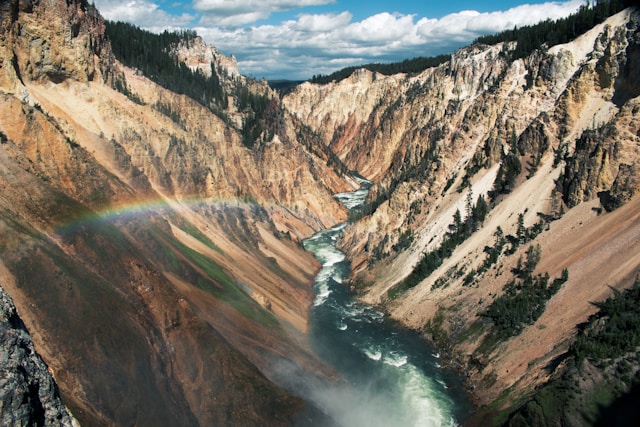
After lunch, head to the Grand Canyon of Yellowstone, a spectacular 20-mile-long chasm carved by the Yellowstone River. The canyon’s colorful walls, adorned with pinks, yellows, and oranges, provide a stunning backdrop for the park’s most famous waterfalls.
Start at Artist Point for an iconic view of the Lower Falls plunging 308 feet into the canyon. Then, drive to the North Rim to see the Upper Falls and walk along the brink of the Lower Falls for a thrilling perspective. Don’t miss Lookout Point for another breathtaking view of the canyon and falls.
Theodore Roosevelt once said, “There can be nothing in the world more beautiful than the Yosemite, the groves of the giant sequoias and redwoods, the Canyon of the Colorado, the Canyon of the Yellowstone, the Three Tetons; and our people should see to it that they are preserved for their children and their children’s children forever, with their majestic beauty all unmarred.” Standing at the edge of the Grand Canyon of Yellowstone, you’ll understand why he felt so strongly about preserving these natural wonders.
Evening: Hayden Valley
As the day winds down, make your way to Hayden Valley, one of the best places in Yellowstone for wildlife viewing. This broad, grassy valley along the Yellowstone River is home to large herds of bison, as well as elk, deer, and the occasional grizzly bear or wolf.
Arrive about an hour before sunset and find a safe pullout to park. Bring binoculars or a spotting scope for the best wildlife viewing opportunities.
Day 2 in Yellowstone

Morning: Old Faithful and Upper Geyser Basin
Begin your second day early at Old Faithful, Yellowstone’s most famous geyser. While waiting for the next eruption (which occurs roughly every 90 minutes), explore the visitor center to learn about the park’s geothermal features.
After witnessing Old Faithful’s spectacular show, take time to explore the surrounding Upper Geyser Basin. This area contains the highest concentration of geysers in the world, including predictable ones like Castle Geyser and Grand Geyser. The entire loop trail takes about 2-3 hours but offers an unparalleled opportunity to see a variety of geothermal features.
Afternoon: Midway Geyser Basin and Grand Prismatic Spring
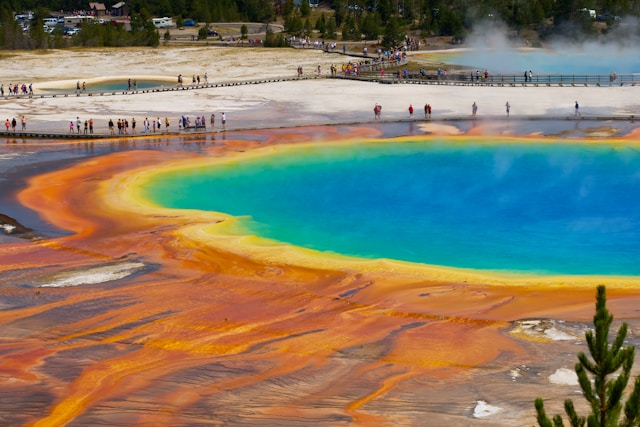
Next, head to Midway Geyser Basin, home to the iconic Grand Prismatic Spring. This massive hot spring, the third-largest in the world, is known for its vivid rainbow colors caused by heat-loving bacteria.
Walk the boardwalk around the spring to see it up close, but for the best view, hike the short trail to the Grand Prismatic Spring Overlook. From this elevated vantage point, you can fully appreciate the spring’s enormous size and brilliant colors.
Evening: West Thumb Geyser Basin
End your Yellowstone adventure at West Thumb Geyser Basin, a often-overlooked gem on the shore of Yellowstone Lake. This compact area features a variety of geothermal features, including deep blue hot springs and mudpots, all with the backdrop of the lake and distant mountains.
Your two-day journey through Yellowstone has only scratched the surface of this extraordinary place, but it’s given you a taste of its wild beauty and ever-changing nature.
Where to Stay in Yellowstone
Choosing the right accommodation can significantly impact your Yellowstone experience. Options range from rustic cabins to full-service hotels, both inside and outside the park.
For a two-day itinerary, staying inside the park can save valuable time. Canyon Village, located near the Grand Canyon of Yellowstone, offers a central location for exploring both the northern and southern parts of the park. Old Faithful Inn, a historic log hotel near the famous geyser, provides a unique lodging experience but books up quickly.
If you prefer more amenities or find in-park lodging full, the town of West Yellowstone, just outside the west entrance, offers numerous hotels and restaurants. It’s conveniently located for accessing many of the park’s major attractions.
Tips for Visiting Yellowstone
- Start Early: Many parking lots fill up by mid-morning, especially in peak season. Getting an early start allows you to beat the crowds and potentially see more wildlife.
- Pack Layers: Weather in Yellowstone can be unpredictable. Bring warm layers, rain gear, and comfortable walking shoes.
- Stay on Boardwalks: For your safety and to protect delicate thermal areas, always stay on designated boardwalks and trails.
- Respect Wildlife: Maintain a safe distance from all animals. Park regulations require staying at least 100 yards away from bears and wolves, and 25 yards from other large animals.
- Bring Binoculars: These are essential for wildlife viewing and can enhance your experience at geothermal areas.
- Download the Park App: The official Yellowstone app provides offline maps, geyser predictions, and other useful information.
- Be Flexible: Geothermal activity can cause temporary closures. Have a backup plan for each day of your visit.
Frequently Asked Questions
How much does it cost to enter Yellowstone National Park?
As of 2025, a 7-day pass for a private vehicle costs $35. An annual Yellowstone pass is $70, or you can purchase an America the Beautiful pass for $80, which covers all national parks for a year.
Are pets allowed in Yellowstone?
Pets are allowed in developed areas and within 100 feet of roads and parking areas. They must be leashed at all times and are not permitted on boardwalks, hiking trails, or in the backcountry.
What wildlife can I expect to see in Yellowstone?
Yellowstone is home to a diverse array of wildlife, including bison, elk, deer, bears, wolves, and numerous bird species. Wildlife sightings are never guaranteed, but areas like Lamar Valley and Hayden Valley offer the best chances for viewing.
Is it safe to visit Yellowstone’s thermal areas?
While the thermal areas are safe to visit when following park guidelines, they can be dangerous if rules are not observed. Always stay on boardwalks and designated trails, and never touch or approach thermal features.
Yellowstone National Park offers a lifetime of exploration, but even with just two days, you can experience many of its iconic features and natural wonders. By following this itinerary and keeping these tips in mind, you’ll be well-prepared for an unforgettable adventure in America’s first national park. Remember, as you traverse this remarkable landscape, that you’re not just a visitor, but a steward of this incredible natural heritage.